lake george

Symposium archives

The last hurrah

No wonder South Korea is the 10th biggest economy in the world; they work at speed and accomplish a great deal. And they certainly know how to build bridges and highways and tall buildings and lots of them. Mr Ko , Director of Yatoo Korean Nature Artists Association, works double-time most of the time. He organised a number of programs while I was at the Centre including the:

In addition Mr Ko undertook the task of organising the international artists involved in these programs. (Trying to organise artists I am told is like trying to herd cats)!

For my exposition I prepared an 8 minute slide show which I presented to members of the Yatoo Nature Artist’s Association Committee and fellow artists. While giving a brief introduction to some of the nature art works in the Nature Park, most of the images deal with the making of the stone sculpture and its installation for those interested in process.

After nearly three and a half weeks my time in Korea was limited. The speed with which things had to be done increased. I remember one day in particular where I had been flat out; fixed a door handle that came off in my hand, then joining Mr Ko when he  picked up a VIP from the Arts Council of Korea at the bus-station . We travelled to Wongol village for the benefit of the VIP providing him with an opportunity to meet the artists in residence after which we had a late lunch at a restaurant. Back at the Centre I began oiling and burnishing a wood sculpture I had made, packing away my tools, doing last minute washing, deciding what must stay and what clothes, books, catalogues to pack, etc……

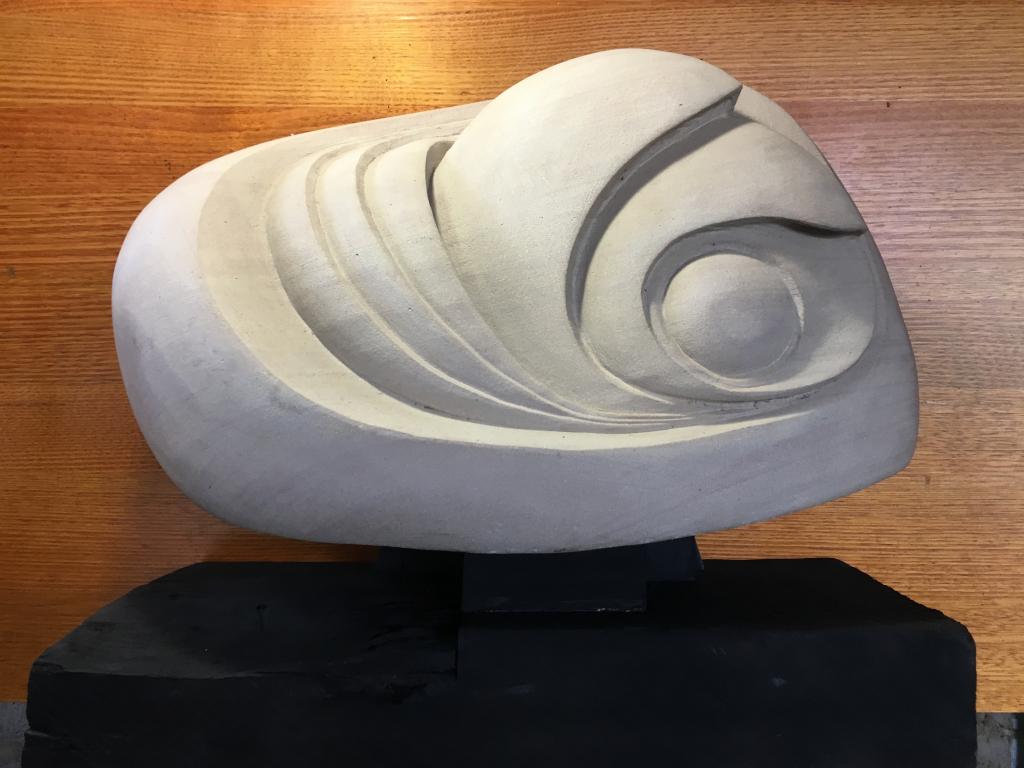
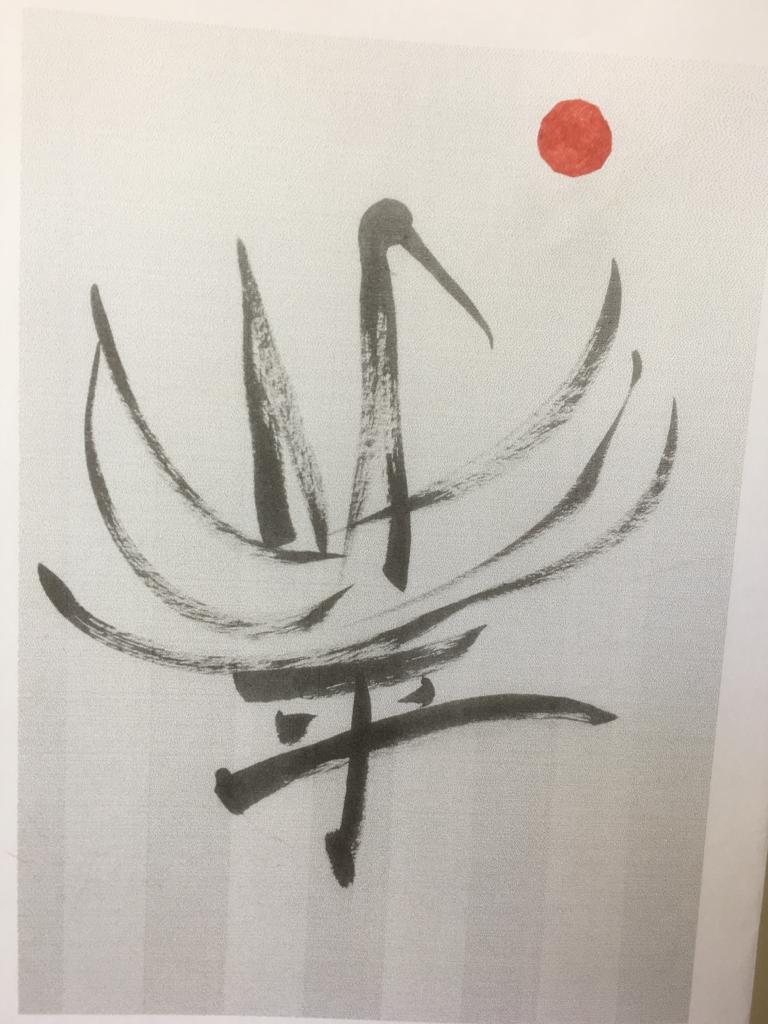
The sculpture I was oiling was a small version of the large stone ‘sword/leaf’. I used an amazing wood, a cross between a silky oak and a maple, to make this work which I signed with the JF logo and duly presented to Mr Ko’s wife at her restaurant. It felt good to be able to express my thanks and appreciation for all the meals I had enjoyed. (I had anticipated buying and preparing my own food for 4 weeks but instead I enjoyed traditional Korean food every day). And of course, no Korean meal would be complete without kimchi.  Koreans serve the spicy fermented vegetables at almost every meal, and few Koreans can last more than a few days before craving more. My hosts were surprised when I told them I had kimchi at home in Australia and enjoyed the taste.

War and Peace

Yesterday was a long day; up at 6.30 AM and not back to the Yatoo Centre till 12 midnight. Artists associated with Yatoo Korean Nature Artist’s Association have recently installed sculptures at the Dorsan Peace Park near the de-militarized zone (DMZ) which has separated North from South Korea for the almost 60 years. Owing to genuine hostility between the North and the South, large numbers of troops are still stationed along both sides of the line, each side guarding against potential aggression from the other side. The armistice agreement explains exactly how many military personnel and what kind of weapons are allowed in the DMZ and soldiers from both sides patrol inside this area. It was an overcast day with frequent thunder, lightning and rain squalls. Our mood was not helped by the fact that we had to surrender our passports and wait in the bus for over an hour before driving off towards the DMZ through vast stretches of razor wire each side of the road. It appears that soldiers from the North have dug a number of tunnels over the years aimed no doubt at moving troops and weapons to the South for surprise attacks. On a clear day North Korea is visible away in the distance across the DMZ. Believe it or not but the DMZ has become a sanctuary for wild life. Life plays some strange tricks; civilised people are not safe in this place but wild creatures are!

We departed from the DMZ leaving behind the many tourist coaches, souvenir shops and tunnel walkers and headed for the Dorsan Peace Park. We gathered to listen to an ensemble of music students playing waltzes which added to the sense of occasion. I figure they played the waltzes as a reminder of bygone days. We sheltered from the rain as all those present were introduced and the artists made short speeches. Kang, Hee-joon has seldom embraced his brother stranded in North Korea which made his work especially poignant. A human scale figure cut out from a sheet of steel leaving a space. The cut out figure was placed some metres away. The artist and one of his fellow Korean artists stood in front of the sculptures and when the urge took them both raced towards each other to embrace, like brothers. Hur, Kang from Korea worked with natural timber taken from a tree and skilfully reassembled it symbolising how life will grow from the field of sadness.

Pawel Chlebek Odebek from Poland created a powerful piece in cast concrete. A human form is struggling to be free from the ties that bind. The pain is so great that his chest splits open revealing a heart bound in barbed-wire. We in the South can feel their pain and pray for the madness that divides this beautiful country to end so the families and the country can be reunited. Roger Tibon from the Philippines created a ‘work in progress’. Two figures crouch on a partially made metal bridge. They labour to raise the final piece which when it is placed in the middle will bridge the gulf between the two sides. And Roger Rigorth from Germany offered seven beautifully crafted bamboo and white cloth wing-like sails. As the wind gusted the sails danced in-line in a shallow pond near the entrance to the park. The sails appear to wave and send greetings of joy to all Koreans.

This was a day where the weather matched our mood. It was also a day when artist sought to rally in support of freedom.

The Wongol experience

Recently we spent the day at the Yatoo Nature Artist’s International residence at the small village of Wongal. It was time for some of the resident artists to put their work on show, and what a show it turned out to be. Wongl Jeon from Korea and a founding member of the Yatoo group explained he wanted to give us all flowers. In a small gallery space this artist had prepared 22 coloured images of his hand open palm, each hand revealing a flower. It is autumn in Korea and yet Wongol found a great variety of flowers to present to us. He led us to a field where he had erected a timer frame with two sliding window panes. Framing a view is always an effective way of focusing attention. However as we were to learn this work demanded audience participation. One curator/artist ventured forward and obliged by sliding one of the windows across the other only to be confronted by her own image in a mirror. The game had only just begun as where one expected to be able to see through the open window there turned out to be a third sliding window with an image of the artist seen at a distance in the gesture of presenting a bunch of flowers. There was magic in the air as more people tried to vary the sequences to find reality amongst multiple reflections.

Ruti Raviv from Israel plays in the garden. She crafted a large ball from Chestnuts. Those of you who have attempted to collect Chestnuts will realise that this is a hazardous occupation given the multitude of fine extremely sharp prickles that form the nut’s outer casing. Not content with this Ruti also created a path or was it the shadow of a tree ( or was it both). She chose to make the path from small rounds she made from wood she had collected on the property. The path wandered about and at one point draped itself over a small rocky outcrop. Inspired by the natural environment, Ruti seeks to use only materials from the site thus making the work site specific  and in harmony with the space.

Peter Laurits from Estonia is an artist with a camera. Having made it on the world stage at one point in his life he retreated to a quite forested place in  Estonia where he lived many years. Peter does not take pictures any  more he prefers to ‘make’ pictures. One method he uses is to get up close and personal with nature by letting his camera wander about without his eye stuck to the view finder. In fact he does not want to see the view; he rather enjoys seeing what his camera conjures up. He selects few images and works with those he believes will develop into something engaging. When logic escapes him he turns to the I-Ching, The Chinese Book of Changes, using hexi-grams to help determine the way. An interesting artist with a background in theatre and drama all of which informs his current work.

There was ample time at Wongol to ramble in the forest, make sculptures, make discoveries and relish the peace of this wonderful place. Artists are seldom happy unless they are experimenting or making something. From the top of nearby hills to the bottom of shallow streams artists that day made site specific works aplenty. About 30 works were photographed and colour images printed on A4 sheets of paper then pegged on lines to create an impressive nature art show.

The local villagers dressed in traditional costume, carrying impressive drums and , turned up as the full moon was rising. They enjoyed the art on show and then proceeded to regale us with song and dance. The fun really started when they ran an impromptu drumming workshop for all the artists. They must have been pleased with our efforts as they insisted we drum for them while they danced and sang. WOW. What a night it was; one to remember. It may not have been The Met but it was a great way to blend in and spend time with a group of people to whom language was no barrier and whose generous spirit brought the whole valley alive.

The stone factory

Carving the Black Granite at the stone factory was an experience I will remember. The stone factory is only one small but impressive part of the Gaewha Arts Park. The sheer size of the stones that are excavated from the local mountains is impressive as is the range of equipment assembled to work it. During my two days there a small radio controlled cutting machine on caterpillar treads made its way towards a huge stone which it set about cutting in two. The guy controlling the machine sat o a rock nearby and never got his hands dirty.

The Koreans are noted for the quality of the big saw blades they make for cutting stone into slabs. Watching the blades crossing back and forth across the stone and effortlessly cutting deeper and deeper is quite mesmerizing. Massive stones were moved and positioned  with ease by artisans using forklifts and hooks and slings attached to the overhead gantry. I had enough to do carving and shaping my 1.8 metre 130 mm thick slab without trying to carve a hemispherical hole in a natural stone. It was decided it was too dangerous for me to do anyway so the job was done by an artisan and he took a whole day to do it. It was a perfect job.

The Art Park has a great restaurant which is entered though a large covered flower garden featuring tropical plants and ponds full of Golden Carp. I was treated to full Korean style breakfast lunch and dinner. Strolling around the Park it was amazing to see so many sculpture some of which were 10 metres high. The ‘Poets Walk’ winds through the landscaped area and reveals the work of many poets incised into the polished surfaces of numerous natural stones.

Since my return to Yatoo Nature Art Centre, I have been flat out working to fine tune my installation ’Reflections’ making sure the base natural stone was level so the hemispherical basin carved into it can be filled with water. Should people chose to look into the basin they will not only see their reflection they will glimpse the sword/leaf dangling overhead! The Black Granite takes a wonderful polish but for this work I decided to go with  a comparatively ‘rough finish’ straight from the diamond blade cutting tool. I polished this surface which highlighted the high points and gives an overall darker hue to the stone.

To sign or not to sign. Mr Ko insisted that I sign the work which was all very well as the best place for a signature happened to be 4 metres up in the air. In addition the stone was suspended thus liable to move at the wrong time so using hammer and chisel was out. So I decided to use my electric Dremel Rotary tool. After some minor technical hitches such as plugging the tool in but the tool failing to work, I managed to sign the work using a character created for me by my son Alexander.

Reflections

Reflecting on the natural environment deepens our connection with our personal nature. At this critical time in our history when the natural environment is under attack from so many quarters, it is obvious that we need to do something positive. Yatoo Nature Art Association has provided me as an artist with an opportunity to create a work that inspires contemplation and reflection. The Korean Black Granite stone suspended above the reflecting pool; is it a sword or a dagger, or is it a leaf turned to stone? Like Damocles in the ancient Greek story are we now the ones in danger, a sword suspended over our heads and liable to fall unless we change our ways?

The tripod from which the stone is suspended is over 4.5 metres high. I carved the 1.8 metre Korean Black Granite leaf/sword in 2 days at a stone factory about1 ½ hours from the Yatoo Centre. The Director Mr Ko is pleased to have the work as Many artists will come to the Centre for the Art Biennial.

Country residence

The Yatoo Nature Artist’s Association has a residence at Wogol about 45 minutes from Gongju and set in a valley where local villagers grow rice and market garden vegetables. 6 artists can stay at the residence for a period up to 3 months There is also the opportunity to run workshops involving people from the local community.

The day of our visit we stopped in the village to be introduced to the elders. The people are gentle and welcomed us warmly. The land in the surrounding country appears lush and all manner of plants are growing. I have seen sesame plants and have even eaten the leaves of the sesame plants in a Korean restaurant. I have also tasted fresh kimshi and 12 month old kimshi and enjoy the sharp, spicy taste with most meals.

Wandering  around the spacious grounds I came upon art works tucked in secluded areas of the garden or taking centre stage on the lawns. Some of these art works and others in the Nature Art Park  lead me to thinking about nature and art. It is possible to see ‘natural’ at one end of a continuum and ‘artificial’ at the other end. A sunset is not art, it is a  natural phenomena, where as a picture of a sunset is an artificial representation of it. Rather than capturing nature on canvas or on film, Nature art proposes that art be site specific. Using the attributes of the site in an artful way the aim is to focus attention on the natural environment, its beauty, its complexity it fragility, its power.

I am still coming to grips with this residency. Used as I am to making objects it is a challenge for me to do a simple thing like stacking few  stones on top of  each other or tying a few twigs together and thinking that is enough. OK. Less is more, I know. Now is the time for me to put it into practice!

Rainy day in Gongju

It had to happen. The run of summer weather had to come to an end and today was the day. Gentle but persistent rain all day, grey skies, paved areas awash. There is a big festival to be held in Gongju commencing on 1st October. The rain did not dampen the enthusiasm of workers and organisers who are preparing the river bank parkland to welcome lots of people over the next week or so. They have even suspended a sculpture underneath one of the nearby bridges.

Paid a visit to the National Archaeological museum. The building is relatively new being built in 2004, has excellent gallery spaces and well lit displays with text panels in Korean, English and Chinese. The major exhibit is the Tomb of King Muryeong which yielded over 4.500 artefacts. I was  particularly interested by a stone dagger dating from the bronze age and may use a similar shape in a work I am contemplating.

Nature art has many facets. The most striking difference between placing art objects in a ‘natural’ setting is using materials freely available at the site in a poetic/artistic way to focus attention on the natural setting. One work in the Nature Art Park which exemplifies the nature art approach is by a Korean artist Ko, Hyun-hie who filled the gaps between a cluster of large boulders with twigs and small  branches. The rocks embody ages past while the twigs drop to the forest floor in a few seasons. This work rewards contemplation.

My Korean adventure

Booked in for my flight to Seoul. My big bag weighed in at 20.6 kilos. Right on the money. The guy then calmly informed me that the economy class on my flight had been oversold; would I mind going Premium class. WOW. My first time business class so I enjoyed every moment including settling down for a sleep, stretched out.

At Seoul airport I asked Information for directions to my rest house which I had booked on the internet days before. Of course, they had to ring as they had no idea where it was, only to be told that I was supposed to arrive the day before.  Ah, the joys of travel. They found me another place, Bee Won’, but dormitory only. Long bus trip, walked miles towing my cases over cobbles pavements asking strangers if I was getting closer. Finally some poor guy who was watching his mates play GO, led me around a few really narrow back alleys to my rest house. Amazing, 9 PM and they were still expecting me.

Had a good night’s sleep and met some interesting travellers over tea and toast in the morning. Guys from Canada, Australia, Korea. One guy was going to sleep the next night at the big Buddhist temple close by. I did my Qui Gong on a grassed area nearby and then decided to head straight to Gongji. Train to the Bus Station and bus 90 minutes to Gonji. I phoned Mr Ko the Director of the Korean Nature Artist’s Association-Yatoo and he picked me up. He took me to the Centre where they have office space, and meeting/gallery space, bunk house accommodation, a good art library and the Nature Art Park opposite at the base of Mt Yeonmi. Mr Ko is certain I should stay here in the forest rather than in the rural residence.

Interesting German and Polish artists here doing commissioned works. There are lots of tools and the expectation is I will work in wood. OK by me. The wood is pine with grain similar to cedar. I have not seen other materials but hope there is a chance to use metal and/or stone as well.

We artists went to dinner with the Yatoo members last night in the ‘old town’, sitting on the floor at low tables eating good authentic Korean food with lots of side dishes and a hot pot. I should have taken a picture but have been assure that there will be many other opportunities.

I walked up Mt Yeonmi today and took images of many of the sculptures in the Nature Art Park. Great 360 degree view from the top. Well laid out city with the big Geum river running through the middle. Many bridges and super highways, rice paddies and clusters of office towers and apartment buildings. Rode a bike alongside the river and on into town. Decided I liked it better in the forest.